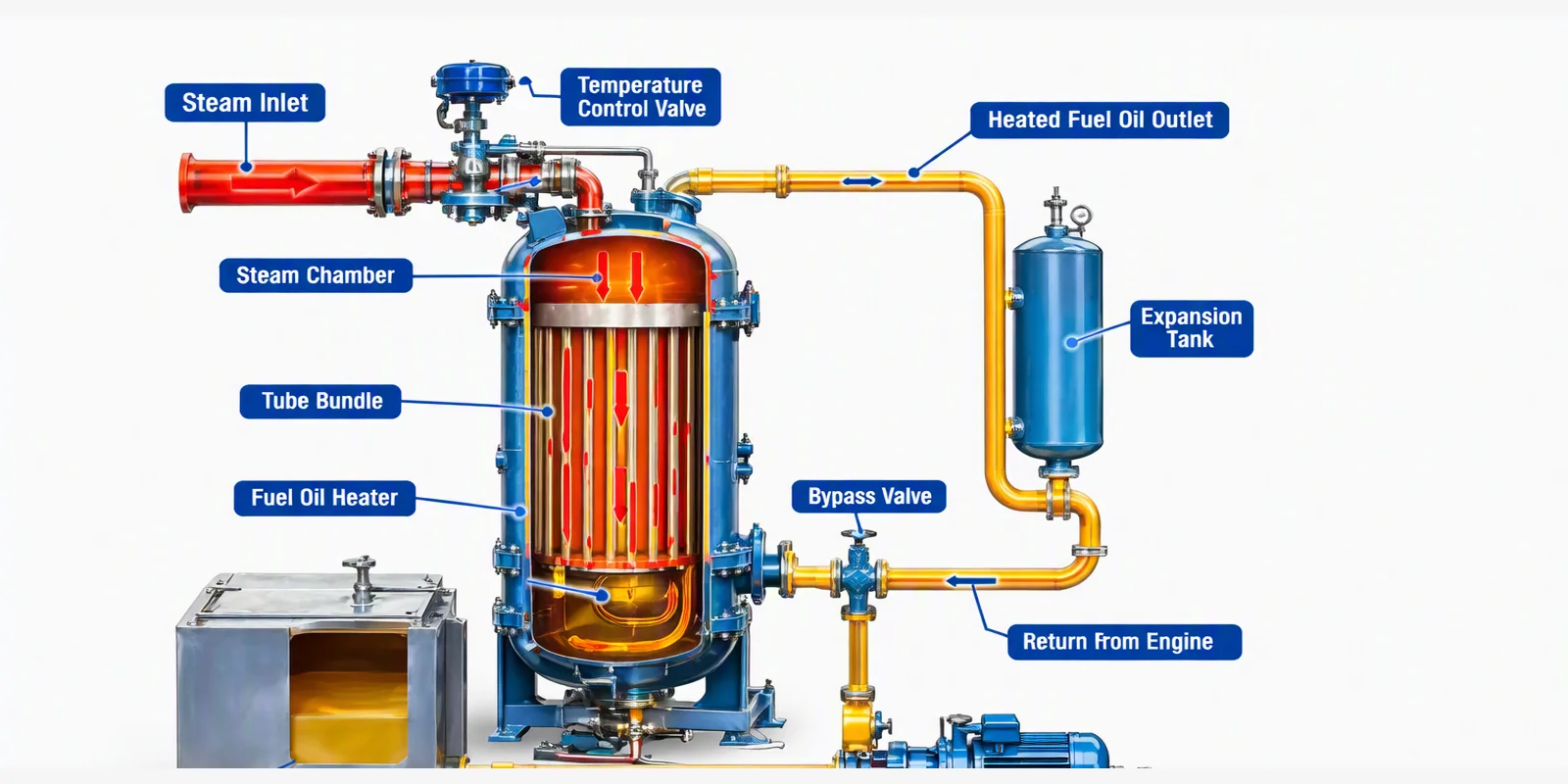
Heavy fuel oil — the residual fraction after refineries extract the lighter products — remains the backbone of power and process heat for industries and off-grid plants across Bangladesh and Indonesia. It is cheap, energy-dense and widely available. It is also unforgiving: handled poorly, HFO costs more in downtime and component wear than it ever saved at the tank farm. After two decades of electromechanical work around boilers, engines and thermal processing lines, these are the fundamentals we insist on in every HFO system review.
Respect the viscosity curve
HFO is a solid at room temperature. Everything in fuel handling is about the viscosity-temperature relationship: storage tanks are heated so the oil can be pumped, separators are heated so water and solids can be thrown out, and the oil is heated once more before injection so it atomizes correctly in the burner or engine. Miss any one of these setpoints and the symptom appears somewhere else — blocked filters, worn injector nozzles, incomplete combustion, exhaust smoke. Typical practice holds storage and transfer oil hot enough to pump freely, while injection viscosity is controlled to the engine maker’s band, commonly around 10–18 cSt depending on the burner or injector design.
Purification is a process, not a machine
- Settling tanks give gravity time: water and heavy solids drop out before the oil ever reaches the centrifuge.
- Purifiers and clarifiers must be sized, heated and maintained as a train — a single overloaded separator quietly passes contamination straight to the injectors.
- Monitor sludge space and clean on evidence (differential pressure, sludge volume), not on the calendar alone.
Heat tracing and insulation are part of the fuel system
Every unheated branch line is a future blocked line. Trace heating on transfer and injection pipework, properly insulated, keeps viscosity in band from tank to burner. Trace faults are among the most common causes of "unexplained" trips in HFO plants — audit them seasonally, because a line that flowed in April can stall in January.
“In HFO plants, fuel quality is not what arrived in the tanker — it is what survives the treatment train. Design and maintenance decide the difference.”
Safety and housekeeping
- Hot-oil lines, flanges and valves need guarding and drip containment; HFO burns are severe because the oil clings at high temperature.
- Tank venting, foam or fire protection, and bund integrity are licensing items in most jurisdictions — treat them as operating items too.
- Keep the chemistry simple: test water content and density on delivery, and reject off-spec fuel before it enters your settling tanks.
The bottom line
A well-run HFO system is quiet and uneventful: stable injection pressures, clean exhaust, separators working within their rated throughput. If your plant fights fuel-related trips, the answer is almost always in heating setpoints, purification throughput or trace heating — and all three are cheaper to fix than the damage they cause downstream.